
Home > Health > Sciatica Pain
The most important vitamin that everyone with sciatica pain (over 50) should take

James Thompson
Journalist from London
3 March 2026 • 3 minutes reading time
James Thompson

The first signs of sciatic nerve damage may surprise you
Most people don't know this, but the real cause of burning sciatic pain has less to do with herniated discs or back problems than we previously thought.
Almost 90% of adults over 50 have bulging discs or wear and tear, but without any painful symptoms.
So what is causing my sciatica pain?
This is where I started searching online for a solution that would truly provide relief and make the sciatica pain go away.
And it wasn't long before I discovered something that really scared me:
"Your sciatic nerve, which runs through your back, hips, glutes, and legs, is starving"
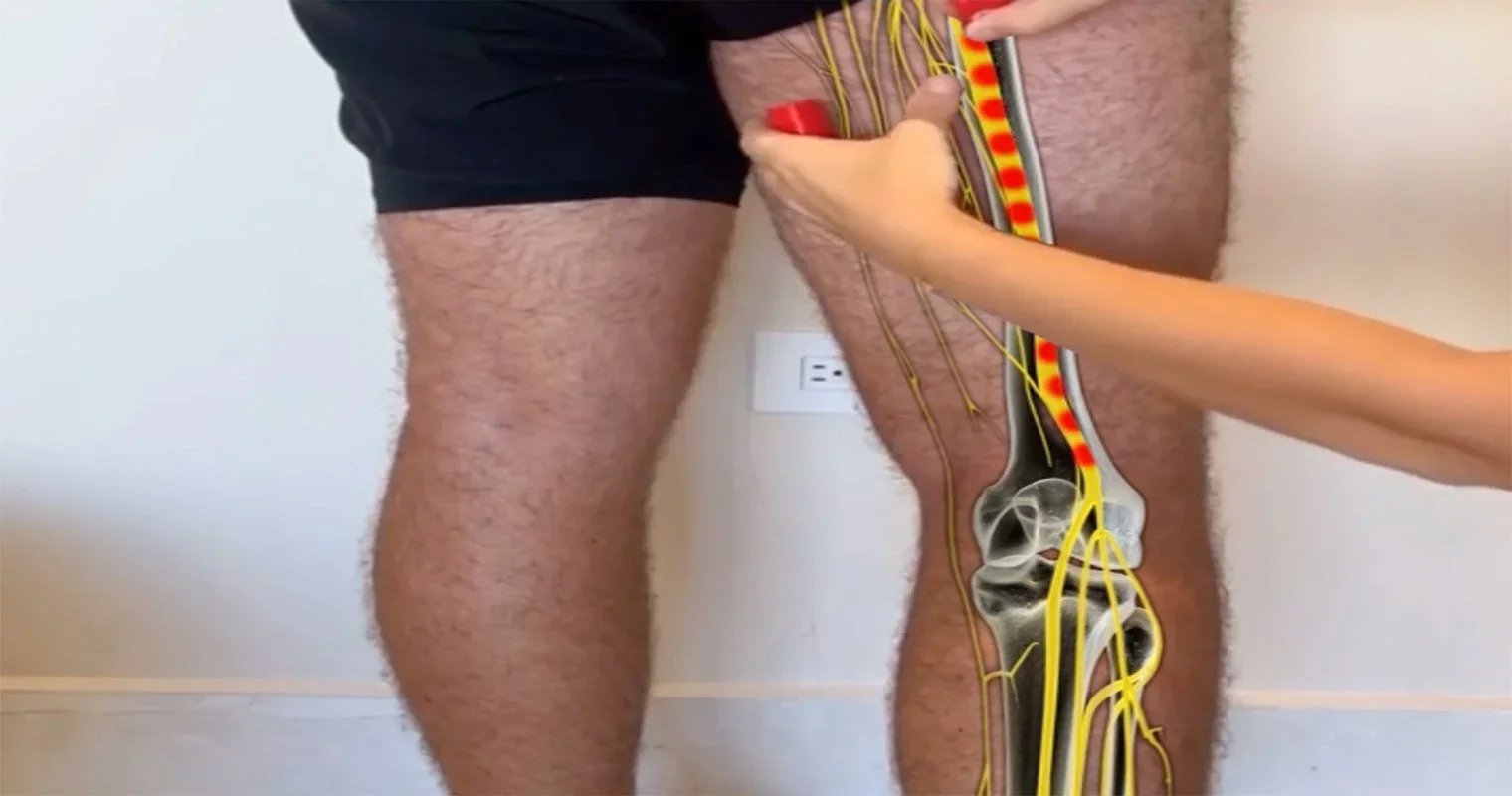
This is what researchers have just discovered about your sciatica pain, and it contradicts everything doctors have told you so far.
What if I told you that the cells in our sciatic nerve need something so simple, yet so neglected, that 97% of doctors don't even pay attention to it?
Before I reveal this missing link, I first want to explain what is actually happening in your body right now.
When the body reaches the age of 50, a worrying process begins.
A very specific nerve vitamin, which the body needs to heal itself, begins to rapidly decrease.
And what makes this discovery so astonishing is the connection to all the symptoms you experience.
Listen, this hidden vitamin deficiency creates a barrier that prevents nutrients from reaching your sciatic nerve.
And this leads to even more burning, cutting, sharp pain, tingling, and eventually numbness.
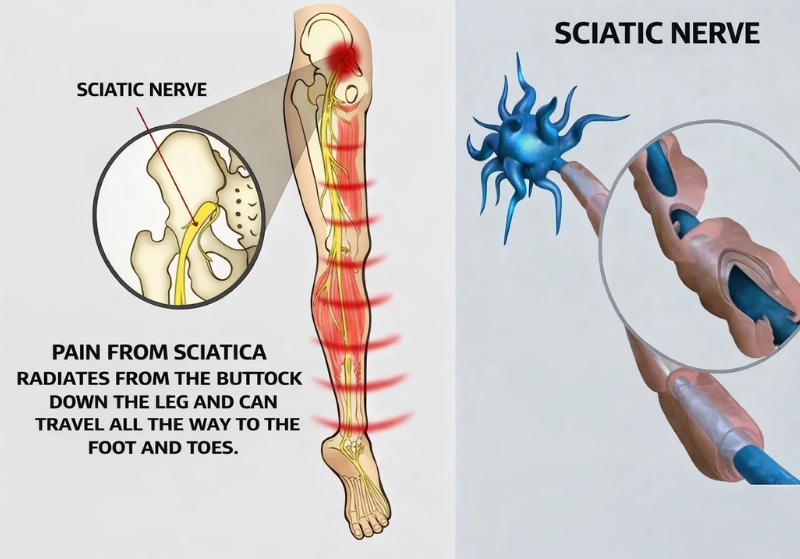
I've spoken to hundreds of people who suffer from sciatica, and most of them knew nothing about this connection. But they described their symptoms like this:
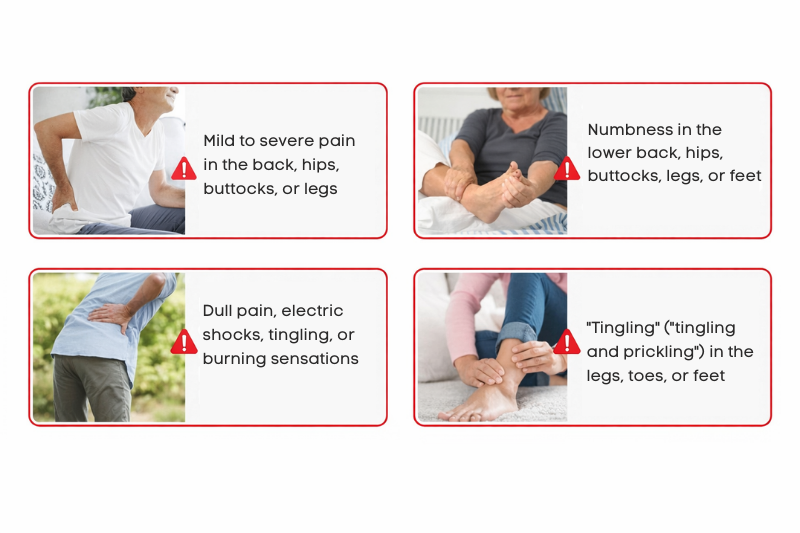
Moderate to severe pain in the lower back, hip, buttock, or along the leg
Numbness or weakness in the lower back, hip, buttock, legs, or feet
Electrical, burning, or tingling sensations
Tingling and a tingling sensation in the legs, toes, or feet
If you experience these symptoms, you may be suffering from a critical deficiency of just one vitamin.
And this is what your doctor doesn't tell you: painkillers,
Anti-inflammatory drugs and cortisone injections only mask the pain, while the real problem only gets worse.
And what happens next is even more terrifying...
Simple tasks like sitting in the car, walking the dog, or even going to the bathroom become increasingly difficult.
Then your family starts to wonder if you can still take care of yourself – and before you know it, you could be sent to a nursing home.
But before I reveal how you can address this deficiency at its root, it's important for you to understand something urgent: this situation doesn't just affect your mobility.
This deficiency has also been linked to dementia, kidney failure, and heart disease.
And something else that's worrying: the painkillers, anti-inflammatories, and injections that doctors prescribe can actually exacerbate this deficiency. This explains the staggering 70% failure rate of conventional treatments for sciatica pain.
Let me be clear: your sciatic nerve is simply 'starving' for essential nutrients it needs to repair itself and fight inflammation.
And what most patients don't understand until it's too late...
Painkillers that doctors give for back pain and sciatica can actually make the situation worse!

Painkillers only 'numb' the pain and do nothing to prevent your nerve cells from dying.
That's why other solutions on the market – such as injections, creams, patches or supports – can even make the situation worse.
And you're probably wondering why doctors continue to prescribe these 'solutions', despite their devastating results.
UK spend a staggering amount of millions of kronor every year on painkillers that have affected entire communities.
The reason for this will surprise you, but first – let me share what leading researchers have researched.
A team of researchers from UK analyzed more than 35 clinical studies on painkillers and discovered something the medical industry doesn't want you to know.
Their conclusion:
"It is now clear that the three most commonly prescribed drugs, recommended by guidelines for back pain, do not provide any clinically significant effect compared to placebo."
Simply put? They are completely useless.
And what's even more worrying is what the UK chemical company discovered about opioids – something your doctor probably didn't mention at your last visit.
"These drugs, which most doctors prescribe, actually cause chronic inflammation and increased sensitivity to pain."
Do you understand that?
The pills that are supposed to ease your suffering are scientifically proven to make it worse.
So why do doctors continue to prescribe them despite the overwhelming evidence?
The answer reveals a serious flaw in our healthcare system, which is causing millions of people with sciatica pain to continue to get worse – even when they follow their doctor's instructions.
The core problem is that while modern medicine is excellent at treating emergencies after accidents, it completely fails with conditions that cannot be solved with risky surgeries or a single pill.
That's the main reason why so many people with sciatica pain continue to get worse – even after they listen to the doctor.
But here everything changes for you...
Finally, I discovered a method to relieve the burning sciatic pain!
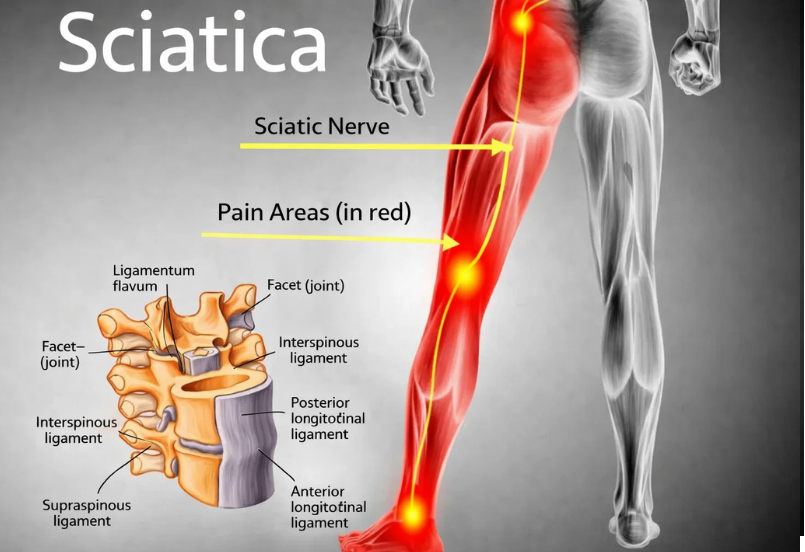
And it was as simple as fixing the vitamin deficiency that was causing the 'starvation' of the sciatic nerve...
When you give the nerve cells the right nutrients, they can finally begin to reduce the inflammation around them, repair damaged nerve cells, and relieve pain.
After I read dozens of research articles, it turned out that the vitamin that could restore this deficiency was already being used in UK – with astonishing results.
This vitamin was originally discovered by Nobel Prize winner Emily Johnson, and was then clinically tested for the treatment of lumbago-sciatica...
That is, patients with 'failed back surgery syndrome'.
And also for several other painful neurological compression syndromes, such as carpal tunnel syndrome.
This just goes to show how powerful this vitamin is in relieving nerve pain in the back, hips, and legs.
But there was a serious problem...
Due to regulations, it was not available here in UK.
Vitamin number 1 for people with sciatica pain (take 2 and see the results)
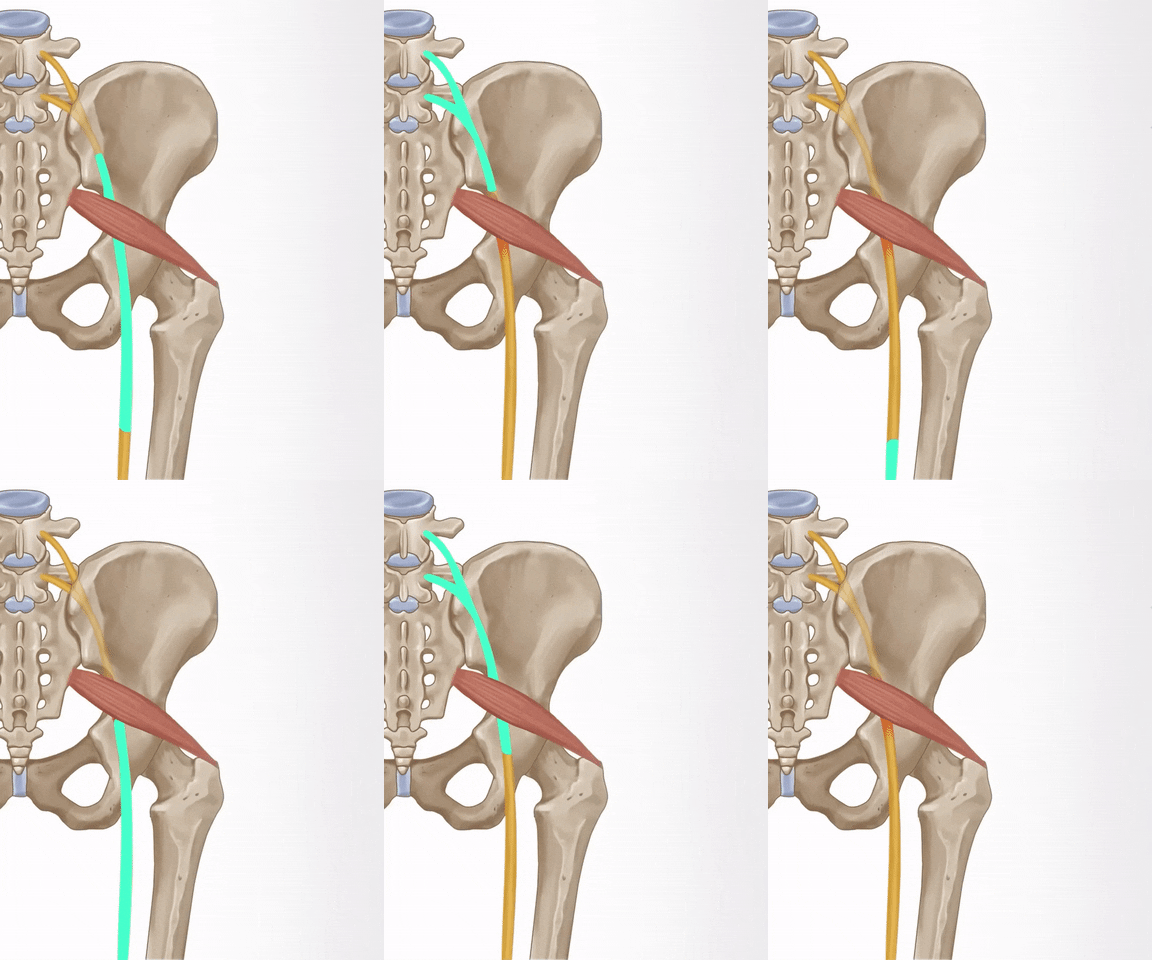
Fortunately for people with sciatica pain, a group of surgeons and molecular biologists from the University of Liverpool managed to isolate this powerful vitamin and make it available to anyone suffering from sciatica problems in UK.
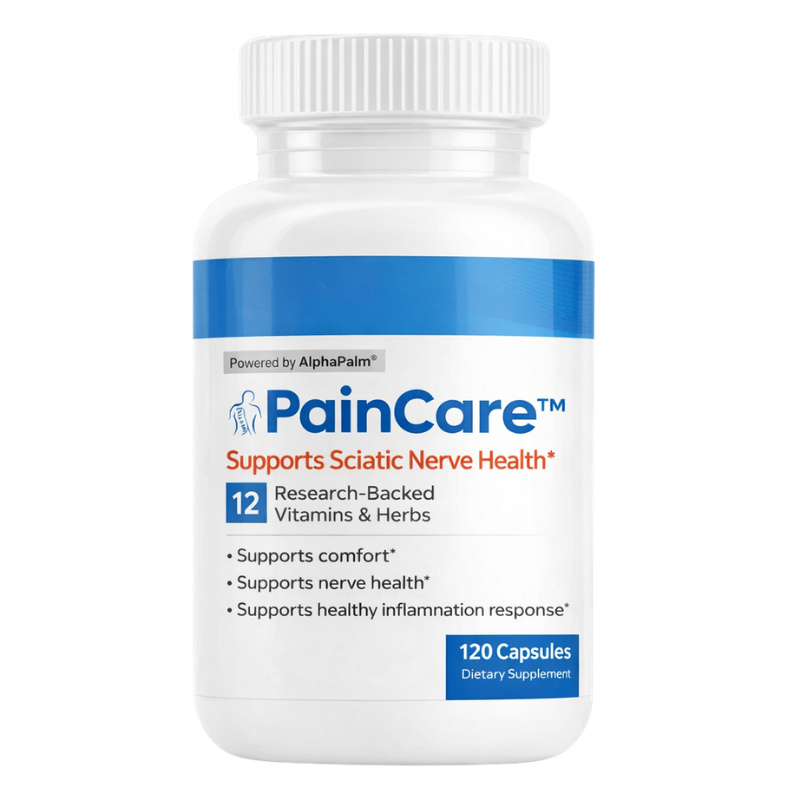
The main brand that sells it in UK is called PainCare™ .
This powerful vitamin 'feeds' your sciatic nerve with exactly the right amount of vitamin needed to give new life to the 'starving' nerve cells and naturally reduce the inflammation around them, caused by bulging or displaced discs.
And this allows your sciatic nerves to get the nutrients they need to recover...
This means your sciatic nerve can finally start to repair and heal itself...
Relieve the burning pain in your back, hip, buttock or leg...
And enable you to return to a 'normal' life – sitting, standing, moving or lying down without constant disruption and pain.
PainCare™ is different from all other solutions I have tried so far
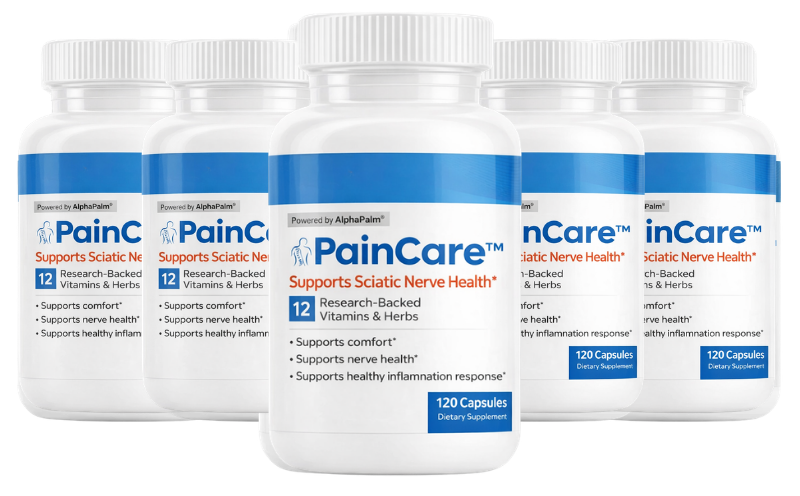
Let me be clear: I have never experienced anything like PainCare™ – and I have tried almost every possible solution.
This vitamin is many times more powerful than any massage, stretching exercises or other treatments, because it actually activates the damaged and 'dead' nerve cells in your burning sciatic nerve.
How to use PainCare™ for best results
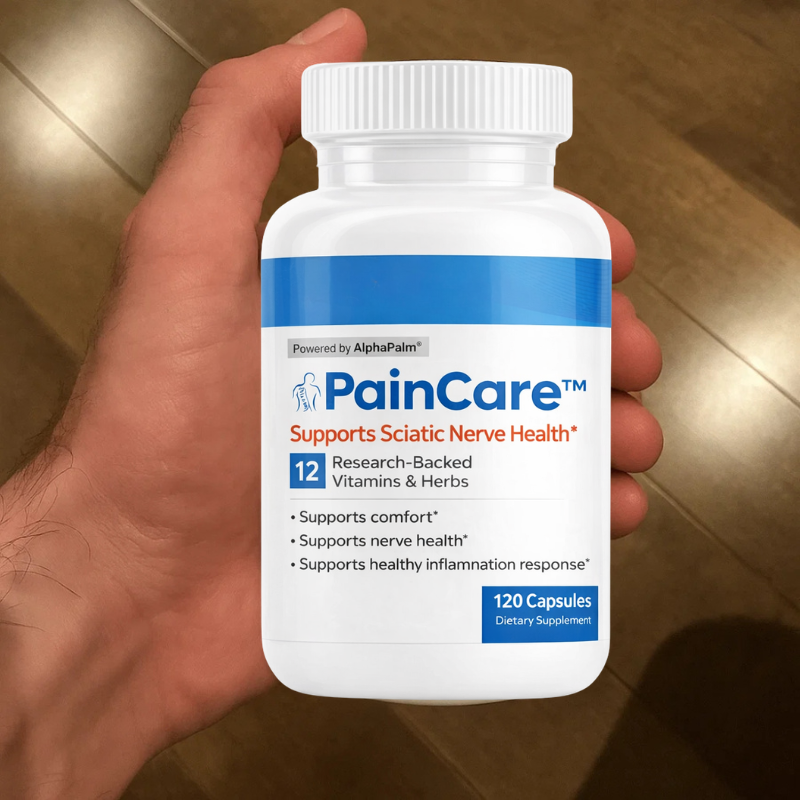
All you need to do is take two capsules in the morning with your meal.
For even stronger results, it is also recommended to take two capsules in the evening with your evening meal.
The nutrients immediately begin to penetrate your back, hips, buttocks, legs and feet, supporting the nerve's natural recovery and healing process.
In the beginning, you may notice an increase in energy, better sleep quality, and a more positive outlook on life.
This happens because your body has been running on 'empty reserves' for a long time.
Eventually, you will find yourself standing, walking, and even running without any pain – something you thought would never be possible again.
Imagine what would happen if you hadn't tried this
This is how Amelia, 75 years old, talks about her experience with PainCare™
“I've been using it for three months now and it worked from the first time I took it.”
“The pain has subsided and I can do things I couldn't do before.”
"I take two capsules twice a day and feel like it just keeps me active. And I'll continue using it as a daily supplement."
Or look at the difference that happened to Lily, who had suffered for months!
"After the first bottle I felt a significant change..."
“My leg wasn't as stiff anymore and wasn't heavy and numb anymore.”
“The next bottle was even better, and the next bottle was the best I've ever felt.”
"It really works – it does its job. Thank you so much!"
PainCare™ has already helped thousands of UK find relief

"I've been using PainCare™ for about a week and a half and I'm completely amazed at how quickly I felt relief.
I used to be unable to sleep at night without a heating pad or cold compress, and I still needed painkillers. Even then, the pain was severe and grocery shopping was almost impossible.
Today I drove 30 kilometers, visited three stores and tonight I feel amazing. The pain is not completely gone, but I estimate it has decreased by 75-80%. I no longer need heat or ice and can sleep without painkillers. I understand that everyone reacts differently, but for me these capsules really work.
I was very skeptical. I had been suffering from severe pain for a year, but had sciatica for four years. I had tried other medications and injections, and when it happened, the injections even made the pain worse. So I started taking two capsules in the morning and two capsules in the evening.
"Wow, what a difference! I was sitting all day and night with heating pads, barely sleeping because of the intense pain. Now I use almost no heat – less than an hour a day. I don't take any other pain medications. It makes me feel like there's finally light at the end of the tunnel."

"I have carefully researched dozens of pain relief supplements and found PainCare™ to be one of a kind.
If you suffer from sciatica pain, I highly recommend it."
Dr. Emily Johnson, PhD, MSM
Important: You will not find PainCare™ products in stores, on Amazon or eBay
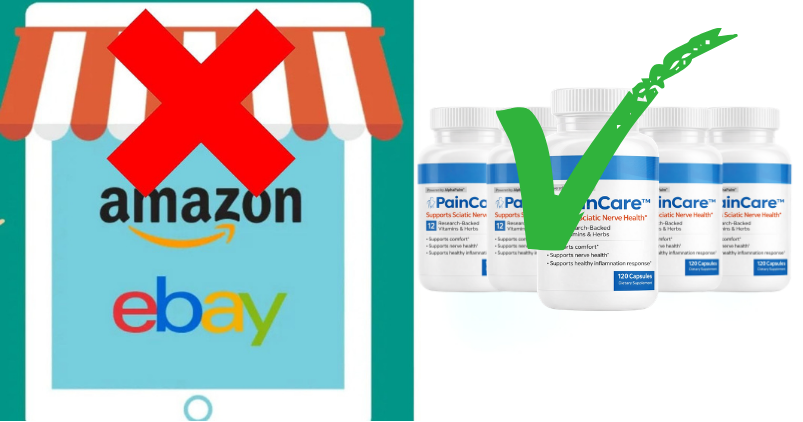
This is because the medical team behind PainCare™ does not want middlemen to increase the price.
So you never have to pay more than 24.95 per month to maintain the health of your sciatic nerve.
In honor of Dr. Emily Johnson and her mission, PainCare™ makes advanced sciatic nerve solutions available to as many people as possible.
Therefore, they sell directly to customers.
PainCare™ relies heavily on word-of-mouth recommendations, and they believe that if the product is good, the word will spread.
That's also the reason why I decided to write this article for them, to contribute a little and spread the information.
It's the least I can do in return for everything PainCare™ has changed in my life.
And that's also why you don't pay the recommended price for such a vitamin – 24.95.
PainCare™ doesn't want the price to stop you, so you don't even pay half of it.
Even though the price on their official website is 24.95 per bottle...
Today you can get PainCare™ via this link, only here, for a simple one-time payment of just 24.95!
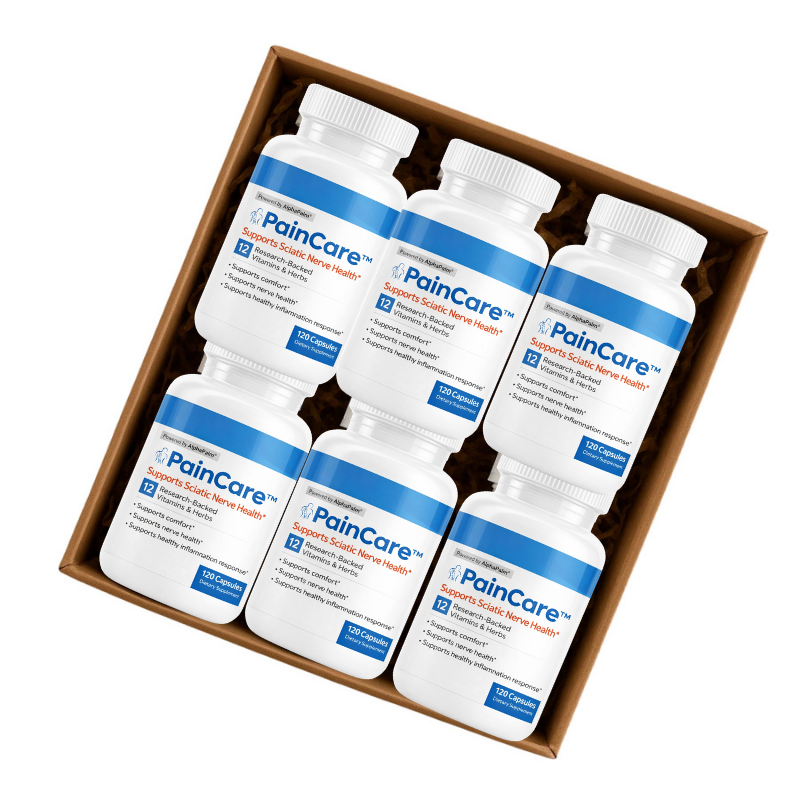
Yes, only 24.95.
But wait...
That wasn't enough!
When I shared my story, the PainCare™ medical team was moved.
It affected them deeply.
In fact, they were so moved that they decided to do something that had never been seen before.
They created a one-time special offer for readers of this article.
Hoping that you will also help spread and share the information with anyone who might benefit from it.
And now you can try PainCare™ for the extra low price of just 24.95 per bottle.

Look... PainCare™ wanted to completely eliminate all risk for buyers.
They are so confident and steadfast in the effectiveness of their product that they immediately offered a guaranteed 30-day money-back program.
They don't want you to pay even a cent until you are 100% sure the product will work for you.
This means that if you are not completely satisfied with the results, PainCare™ will give you back every penny you paid.
They give this guarantee because they are so confident that you will love the results you experience.
And now you have a full 6 months to test PainCare™ and see for yourself how quickly it relieves your burning sciatica pain.
So click on the big blue button below: "Get discount and check availability".
Warning: This offer may end by the time you read this!

PainCare™ has sold out 11 times in the past.
And the current inventory is disappearing faster than expected.
Therefore, I advise you to act quickly.
Because it's possible that by the time you read this... the stock will be sold out again.
And without further delay...
Here's the next step you need to take
Click on the big blue button below: "Get discount and check availability".
This will take you directly to the official and secure PainCare™ website .
There you will receive the one-time offer specifically allocated to readers of this article only.
All you have to do is click the button that says "50% discount – endast idag", and the discount code will be added automatically.
You will then go directly to the payment page, where you will need to enter your name, address and credit card details.
And choose the package that suits you best.
I recommend the 6-month package to achieve maximum results.
So click the blue button below and order your PainCare™ today , with up to 50% off!
The only risk that may arise is pain and regret if you miss this opportunity.
Now I want to take a moment to talk about what will happen if you don't act now.
In my opinion, you only have two options – and each leads to a completely different reality.
See... sciatica pain is a progressive and evolving condition.
This means that if you don't start acting in time, the situation will usually only get worse over time.
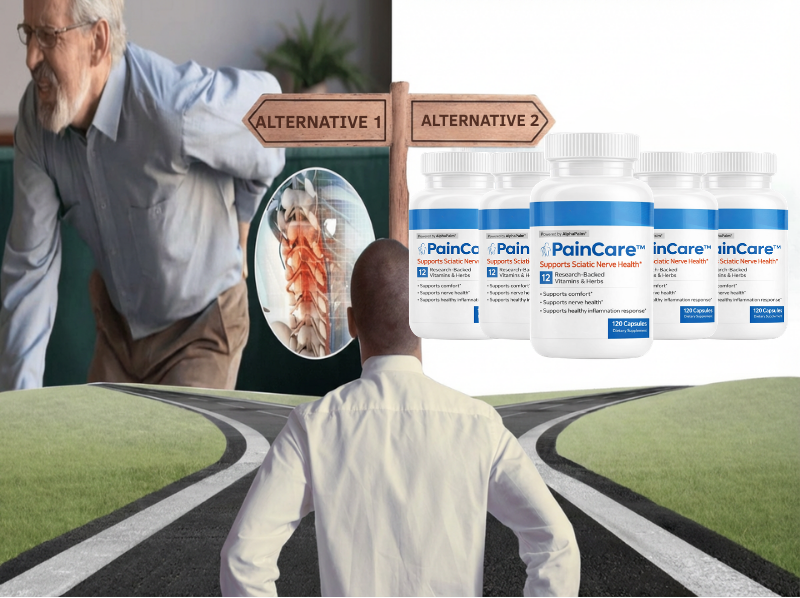
Option #1:
Continue doing what you've been doing so far... wasting time and money on solutions that both you and I know don't work...
And finally let your sciatic nerve – cell by cell.
Until your legs go completely numb and you end up in a wheelchair.
Option #2:
You can make the smart decision and try PainCare™ , and at least have a chance to turn the situation around within a few weeks.
Remember – you have nothing to lose.
Either it works as promised and you experience significant relief.
Or you get 100% of your money back.
Either way, it's much better than just giving up and doing nothing.
It saved my life.
And I'm just one of the more than 10,500 people who will tell you the same thing.
You owe it to yourself to give it a chance.
It's time to do the smart thing, the right thing for yourself and your family, while you still have the opportunity.
Click the button below to use the discount and give yourself a chance at a normal life.
Recommended:
★★★★★
4.8 | 22,482 reviews


Eliminate 97% of sciatica pain
Regenerate cartilage naturally
Walk without pain in just 7 days
Avoid expensive surgeries.
No results? Money back
Comments

Emily Harrison
I was very skeptical, but it really works. Feels natural, no weird side effects.
Like ·
Reply ·
1 ·
1h

Charlotte Hughes
After years of trying everything from painkillers to physical therapy, this is the first thing that really gives me relief.
Like ·
Reply ·
0 ·
55 min

Amelia Brooks
Does anyone here know how long it takes for a delivery to arrive? Want to order one
Like ·
Reply ·
3 ·
49 min

Sophie Bennett
Hi Linda, I got mine after 1 week, definitely buy one!
Like ·
Reply ·
3 ·
39 min

Olivia Turner
I was really skeptical, but it worked much better than anything my doctor prescribed.
Like ·
Reply ·
3 ·
33 min

Grace Mitchell
Does this also work if you have had problems for a long time?
Like ·
Reply ·
3 ·
29 min

Lily Walker
I didn't believe it at first but after reading this I ordered mine.
Like ·
Reply ·
3 ·
29 min
Shipping | Returns | Privacy Policy
Copyright © Store 2025 - 2026 PainCare™. All rights reserved.